
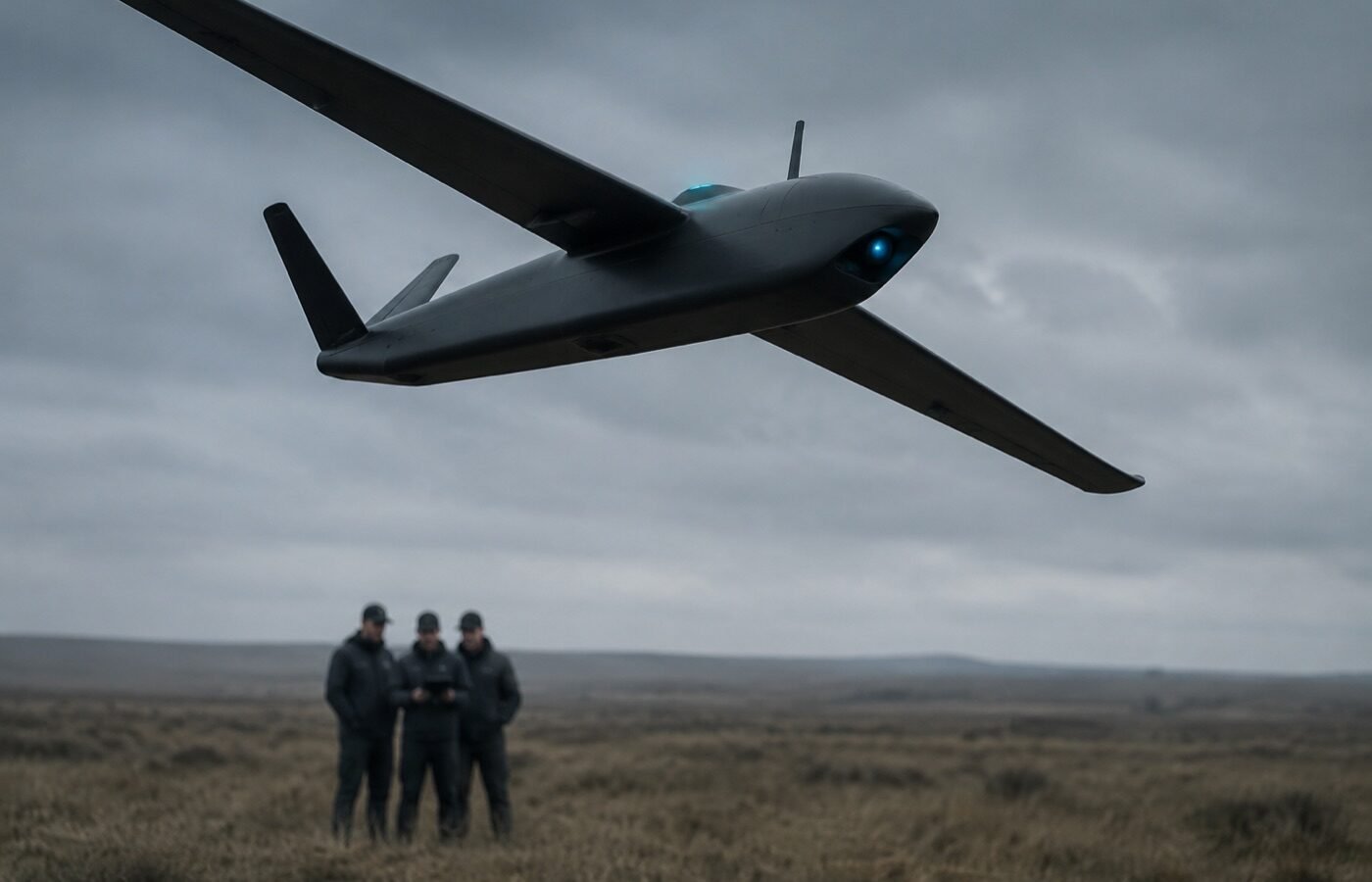
Combat operations in desert regions after nightfall possess a distinct character that can only be fully appreciated through sustained operational experience. Analysts staring at sensor screens at 0300 hours understand that the distinction between the thermal signature of a camel and that of a dismounted rifleman is rarely self-evident. Recent observations regarding the use of unmanned aerial systems against enemy infiltration teams in arid environments reveal an evolving set of practices that warrant careful examination.
The desert night is defined by extremity rather than merely the absence of light. Under moonlit conditions, the density of shadows is sufficient to conceal an entire squad, provided personnel understand how to exploit terrain masking. Compensating for this are the atmospheric conditions: dry, clear air provides an excellent medium for infrared transmission. Thermal sensors operate with a reliability that amounts to a force multiplier. Long-wave infrared cameras can detect radiated body heat, residual warmth from electronic devices, and thermal footprints left by suppressed weapons minutes after firing. This capability forms the foundation of any viable reconnaissance methodology in such theaters.
Platform diversity remains a consistent theme in effective operations. Reliance on a single airframe type introduces unacceptable risk. Small quadcopters handle detailed search tasks at low altitude, hovering above wadis and rocky outcrops where movement is suspected. Their low acoustic signature and radar cross-section make them difficult to detect and engage. The operational impact of losing a single unit is limited. Fixed-wing systems provide complementary wide-area persistent coverage. Their ability to loiter for extended durations creates continuous surveillance, compressing the freedom of movement of infiltrators. An overhead presence that never blinks forces enemy units into prolonged static concealment, which carries its own operational costs.
The employment of sensors benefits from automated pattern recognition rather than exclusive reliance on manual monitoring. Algorithmic detection systems identify thermal anomalies that deviate from established environmental baselines. Three or four discrete heat sources moving in coordinated formation indicate military activity rather than nomadic passage. Infiltration teams attempting to exploit the coldest hours before dawn cannot evade thermal detection, since infrared sensors measure radiated heat independent of ambient light levels. Acoustic sensors mounted on UAV platforms can capture the sound of footsteps on gravel and verbal communications at ranges beyond visual detection thresholds. Layered sensor data converges toward positive identification through correlation rather than any single input.
Adversary adaptation is a predictable variable. Electronic warfare attempts to disrupt communication links and navigation require countermeasures such as frequency hopping and autonomous return-to-waypoint protocols. Terrain features that break line-of-sight necessitate dynamic altitude adjustments and route variations, using dune topography to provide screening for the drones themselves. When opposing forces deploy decoy drones to divert defensive attention, swarm tactics alter the engagement geometry. A distributed array of UAVs forces defenders to allocate sensor resources across multiple simultaneous tracks, creating opportunities for ground forces to maneuver against exposed positions.
No methodology yields perfect results under field conditions. Sand intrusion affects mechanical components and optical surfaces. Battery performance degrades during cold desert nights. False positives triggered by wildlife crossing sensor fields remain an unavoidable source of friction. These limitations are accepted as inherent to the operating environment. The analytical conclusion is that mixed-platform architectures, calibrated thermal imaging, and unpredictable flight profiles collectively produce interdiction timelines that favor the defending force. The objective is to render the nocturnal environment an asset rather than a liability.